
A simple check that can help prevent expensive coating problems
Moisture in a substrate is one of the most commonly overlooked factors when preparing to apply renders, texture coatings, paint and other decorative finishes. Applying a coating system over a substrate that is too wet or contains excess moisture can affect adhesion, drying conditions and times, curing, colour consistency, coating integrity and long term durability and performance.
A moisture meter is a cheap insurance policy for both DIY and professional applicators.
Before you begin coating
Before applying a coating, use a moisture meter to check the moisture level of the substrate or surface.
For general coating applications, set to the moisture meter to the Timber or Wood Moisture setting.
When using the Timber or Wood Moisture setting, readings are generally displayed as Wood Moisture Equivalent (WME). For example, a reading of 15% represents 15% WME.
As a general guide, a substrate with a moisture reading between 12–15% WME indicates a suitably dry substrate for most coating application scenarios. In other words, a reading above 15% WME indicates that additional drying time may be required, or that further investigation into the cause of the higher reading may be needed before coating can commence. Lower moisture readings are generally preferred.
However, always check the relevant coating manufacturers individual product Technical Data Sheet (TDS), as some products or substrates may have different minimum or maximum moisture requirements.
Testing should be carried out in several areas across the wall rather than relying on a single reading. Pay particular attention to areas that may retain moisture, including:
Testing should be carried out in several areas across the wall rather than relying on a single reading. Pay particular attention to areas that may retain moisture, including:
- Shaded or poorly ventilated areas
- Around windows, doors and penetrations
- Sections where different substrates are used
- Lower sections of walls
- Areas where previous coatings have failed
- Substrates that have recently been rendered, patched or repaired
- Areas where previous coatings have failed
Why moisture matters
Even when the surface appears dry, moisture can remain within the substrate. A moisture meter provides an objective measurement rather than relying on appearance or touch.
Excess moisture can remain trapped beneath a coating and in the substrate. With each addition coat of material, that moisture remains locked in the substrate and unable to escape via evaporation through the multiple coats at a suitable rate. This moisture can remain in the surface for several weeks and even months.
If the moisture level is high and a coating system is applied then the escaping moisture cannot easily reach the surface and may contribute to problems such as blistering, bubbling, peeling, efflorescence, colour variation, poor adhesion and extended drying times.
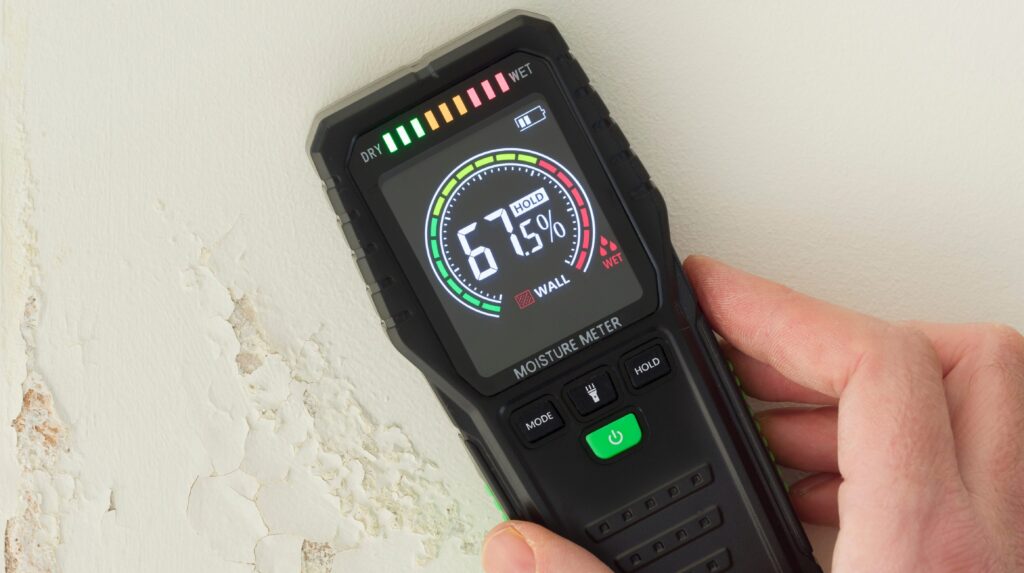
How to use a moisture meter
There are two main types of moisture meters: pin and pin less. Their fundamental difference lies in how they take a reading, which dictates their suitability for various works. Pin type meters use probes to physically measure moisture within a material, pin less meters use electromagnetic sensors to scan the surface. For every day uses, pin meters are probably the quickest and easiest to use and operate.
Pin type Moisture Meter
Pin-type moisture meters are portable devices that use 2 to 4 small steel probes to measure a material’s moisture content. By inserting the probes into the material, the meter sends a small electrical current and measures the resistance. This method allows for readings with a greater range of depth compared to other meters, making them ideal for assessing moisture levels in materials such as render, plaster, plasterboard, concrete, texture coatings and wood, etc.
For enhanced accuracy, sometimes the meters come with an extension for the probes, which are often connected to the meter via a shielded wire, which translates the signal directly into a moisture value and for getting into smaller niches.
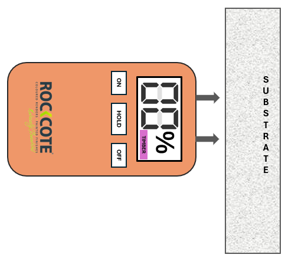
- Turn on the meter
- Remember set the meter to timber setting
- Push the pins into the surface, make sure they are both in contact with the surface
- Press the hold button to lock in the reading
- Pull the meter out of the wall and view the reading
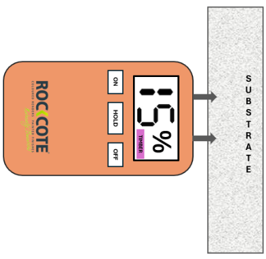
Don’t guess it, measure it
A moisture meter is a simple way to help avoid costly coating problems. Moisture levels should be checked before and during the application process.
Checking a substrate’s moisture level takes only a few minutes and can provide valuable information before committing to a coating application. Recording moisture readings can also form part of good application practice and provide useful evidence if problems arise later.
For professional applicators, moisture testing should be considered part of the standard pre-application assessment. For DIY applicators, it is an inexpensive way to reduce the risk of costly coating failures.